
Hair Growth, Kids, and Fresh-Milled Flour: What’s Nutrition vs. Normal Development?
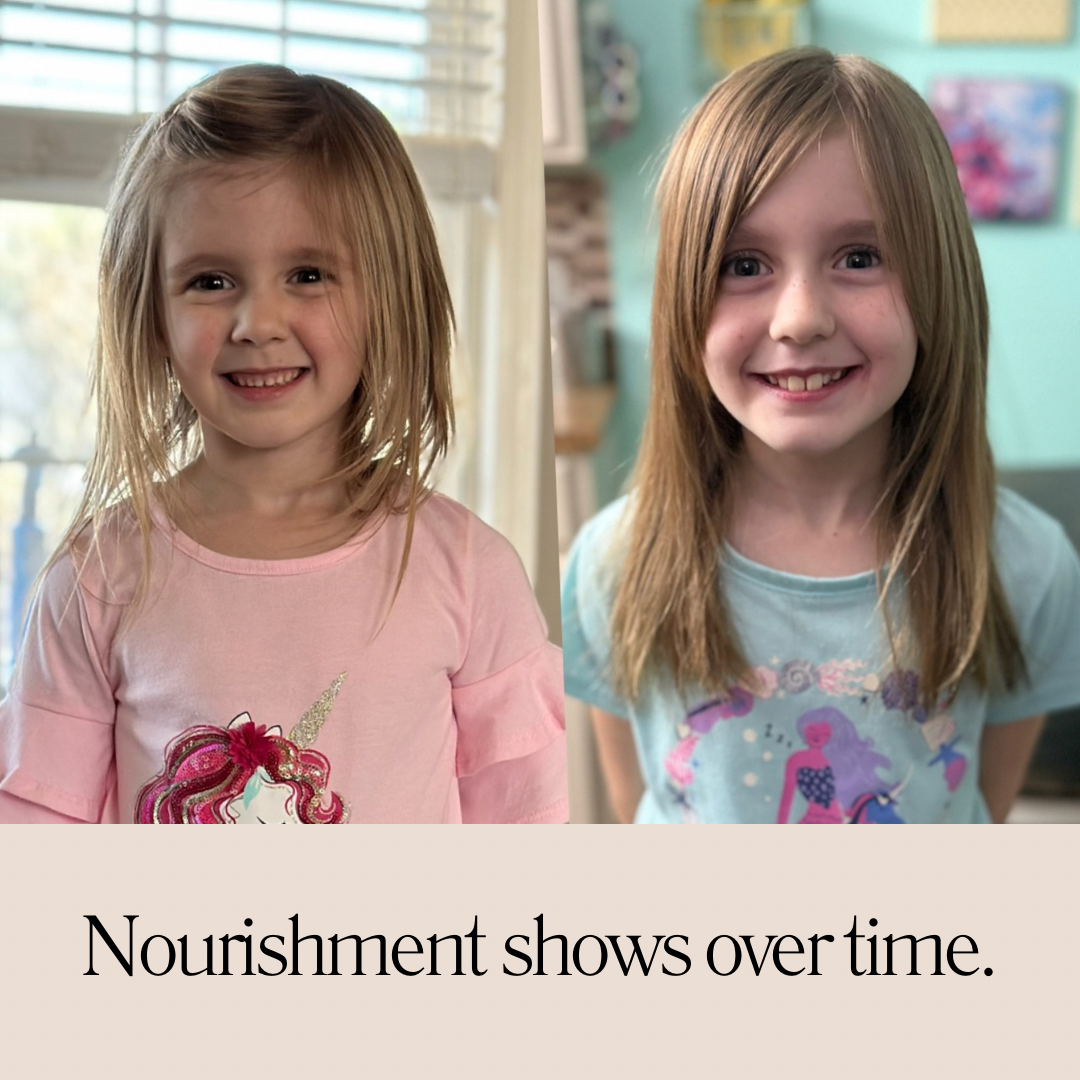
Nourishment shows over time.
When we first started using fresh-milled flour, my goal wasn’t cosmetic health.
I wasn’t trying to “fix” hair, skin, or appearance.
I simply wanted to feed my family more nutrient-dense, God-designed food.
But over time — years, not weeks — I noticed changes.
One of my daughters had very thin, stringy hair when she was younger. Now at 9 years old, her hair is noticeably fuller, stronger, and healthier. The newer growth eventually reached the same length as the rest of her hair.
So the honest question is:
How much of that is just growing up — and how much could nutrition play a role?
What age alone explains
Between ages 6–10, many children naturally experience:
thicker hair shafts
longer growth cycles
better length retention
Some improvement would have happened regardless.
Where nutrition matters
What isn’t guaranteed with age alone is:
improved density
reduced breakage
consistent, long-term growth
Fresh-milled flour contains nutrients that are largely missing in modern refined flour:
B vitamins (including biotin and folate)
minerals that support hair follicles
vitamin E and healthy fats
better overall mineral absorption when paired with gut-supportive foods
Hair is a non-essential tissue.
The body only prioritizes it when its basic needs are met.
Why the timeline matters
This wasn’t a quick change. It happened slowly, steadily, and sustainably — which is often how real nourishment shows up.
Fresh-milled flour didn’t cause hair growth overnight.
It supported the body long enough for growth to happen naturally.
The takeaway
I don’t believe fresh-milled flour is a miracle food, either the ability to heal your body overnight.
But I do believe that when we remove nutrient-stripping processes and return to whole, intact foods, the body often responds in quiet but powerful ways.
Fresh-milled flour didn’t change my child’s genetics — it supported her body so those genetics could express themselves fully.
And that’s what Nourish & Flourish is about:
small changes, long timelines, and trust in how the body was designed to heal.